A Floating Intrusion: When a ship becomes an eyesore (#401)
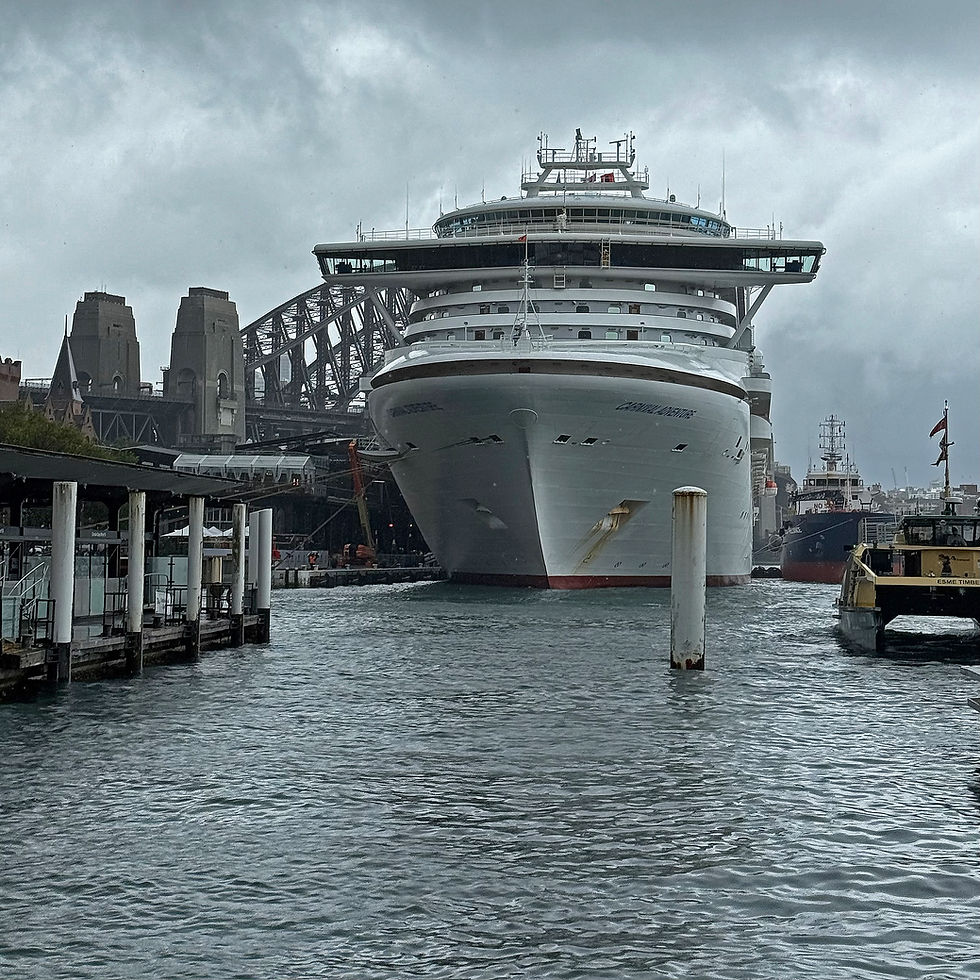
Sydney Harbour has long been defined by two icons. The curve of the Opera House sails and the steel arc of the Harbour Bridge. These are structures born of vision, engineering, and a sense of belonging to place. They rest in proportion to the water and the sandstone headlands, woven into the city’s identity.
And then comes the cruise ship. A floating apartment block, a slab of excess, a city stacked upon itself. Today, it squatted in the Harbour with such bulk that it seemed to mock the Bridge itself, dwarfing it with brute scale.
There was nothing elegant about its lines. No dialogue with water. No deference to the skyline. Just a towering assertion of commercial tourism, dropped into one of the world’s most delicate natural stages.
Circular Quay, already a hub of ferries and movement, became a carnival of noise and consumption. Thousands of passengers disembarked, flooding into the narrow concourse like ants shaken from a nest. Cameras clicking. Voices rising. Souvenir shops and fast-food outlets buzzing with sudden frenzy.
The ship did not merely dock; it colonized.
There is a crassness to such dominance. A disregard for balance. A failure to see that beauty lies not only in what is built, but in how it sits within the frame of nature and community. Sydney Harbour does not need these looming visitors. It suffers them. Endures them, until they depart, leaving behind their exhaust haze, their litter, and the faint aftertaste of intrusion.
Sydney deserves better than to have its greatest stage overwhelmed by floating theme parks. The Opera House and the Harbour Bridge should be seen against the water and sky, not hidden behind a wall of steel cabins stacked ten storeys high.
For all their promise of luxury and leisure, cruise ships like this remind us that some pleasures come at too great a cost to the landscape they invade.


Comments