Corporate Greed (Part 12): Who gets to have an opinion? (#479)
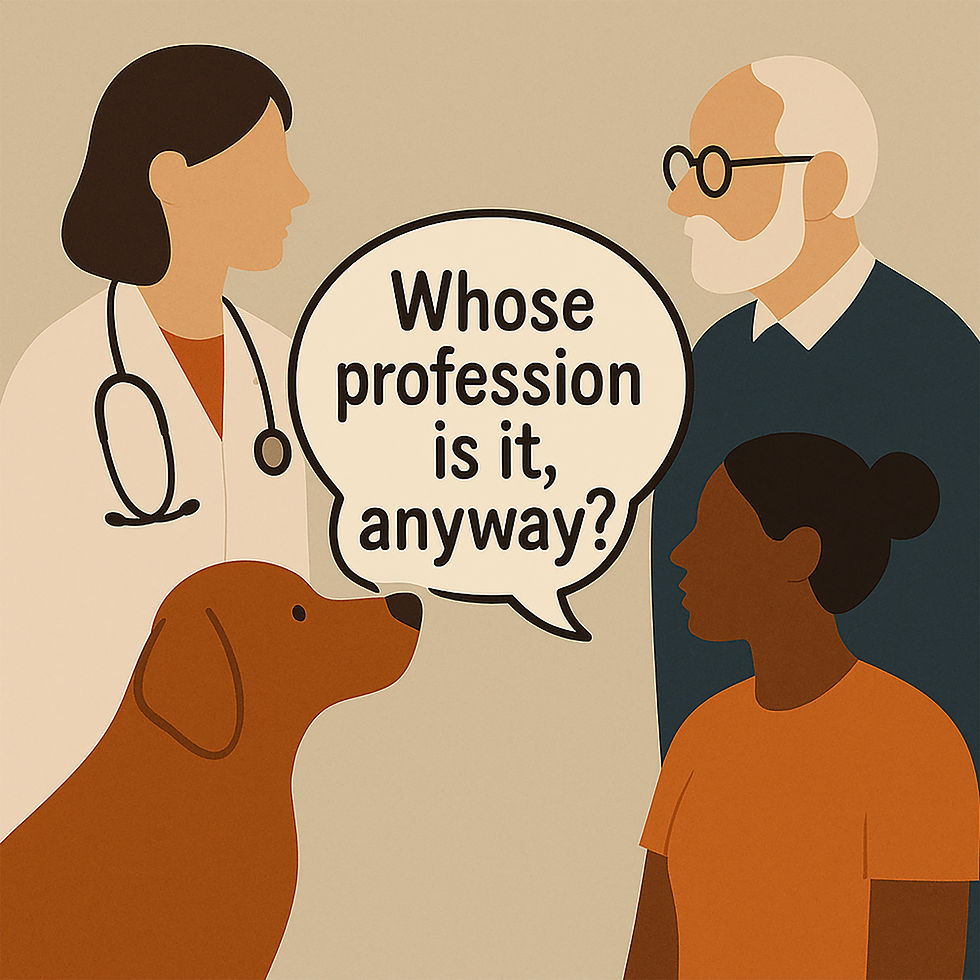
One of the more curious rebuttals to any critique of corporate influence in veterinary medicine is the phrase:
You’ve never worked in a corporate practice, so your opinion doesn’t count.
It’s a silencing tactic.
A way of shrinking the conversation to those already within the system, and by extension, ensuring that dissenting voices remain unheard.
But this argument collapses under the simplest scrutiny.
You don’t need to have drawn a corporate paycheck to understand the ethical implications of corporate greed.
You don’t need to be inside the machine to recognize when the machine is reshaping an entire profession.
The Universality of Observation
Veterinarians, veterinary nurses, and receptionists who have seen their workplaces change under corporate ownership notice the shifts in priorities, pricing, staffing, and morale.
But pet owners see them too. They see higher bills, faster turnover of staff, and longer waiting times. They see fewer familiar faces and more sales pitches.
Academics, journalists, and researchers analyze these trends, comparing veterinary corporatization to what has already happened in medicine, dentistry, and pharmacy. And the public - anyone who loves an animal - is entitled to care about what happens to the profession that safeguards animal welfare.
To believe that only corporate insiders can critique corporate behavior is like saying only politicians can critique politics, or only bankers can question banking ethics.
Observation, reflection, and moral reasoning,
are not the private property of any one group.
Values, Not Vested Interests
Opinions about corporate greed are rooted in values - fairness, transparency, compassion, and professional integrity - not in one’s job title.
Just as political views reflect personal ethics about justice, equity, and governance, opinions about corporatization reflect beliefs about the balance between profit and purpose.
A veterinarian who values patient welfare over profit will naturally question a system that rewards speed and sales.
A pet owner who loves their dog but struggles with an inflated invoice is justified in asking whether financial investors are prioritizing dividends over the well-being of animals.
When the guiding principle of a healing profession becomes maximize shareholder return, something foundational is lost - and everyone, not just insiders, has a right to say so.
The Public Impact
The corporatization of veterinary medicine affects the entire ecosystem - animals, owners, professionals, and students.
Corporate ownership determines access to care, pricing structures, and the professional autonomy of veterinarians. It influences educational funding, research priorities, and even the messaging that reaches the public through sponsored conferences and continuing education (or Continuing Professional Development, CPD).
These are public-interest matters, not private business decisions.
They shape the affordability of care, the trust between vet and client, and the ethics of an entire profession. If veterinary medicine exists to serve the public good - to alleviate suffering and protect animal welfare - then the public is fully entitled to engage in the discussion.
The Right to Speak
In a democracy, opinions are not restricted to those who profit from the system under debate.
People form political opinions without holding office, and economic opinions without running a bank.
The same principle applies here: one doesn’t need to have worked for Mars, JAB, or EQT, to see how their ownership models are changing the soul of veterinary medicine.
The corporate transformation of the profession is visible to anyone who pays attention. It is present in the language of efficiencies, consolidation, and exit strategies.
It’s not just about balance sheets.
It’s about what happens when compassion is managed like inventory.
Rick’s Commentary
Corporate influence in veterinary medicine is not an internal trade secret.
It’s a public moral issue.
Anyone who loves animals, values ethics, or depends on veterinary care has both the right and the responsibility to question it.
To restrict the conversation to those already inside corporate structures is to confuse experience with authority, and silence with insight.
Ethics, after all, belongs to the commons.
And the more voices that join the discussion - veterinarians, pet owners, scholars, and citizens alike - the closer we come to reclaiming a profession that should never have been for sale.



Comments