India: Part 4 of 8 - Faith (#486)
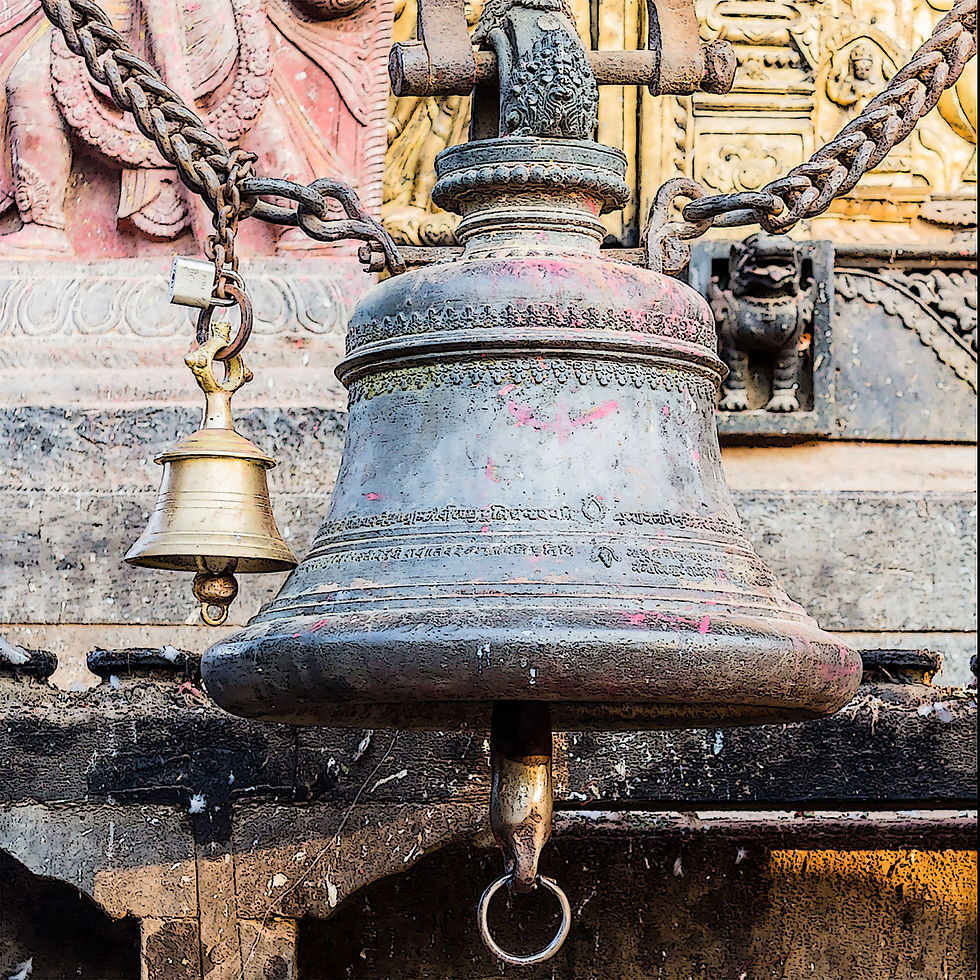
In India, faith does not lower its voice.
It rings bells before dawn.
It burns incense at street corners.
It spills into traffic and interrupts schedules without apology.
Here, belief is not something you carry discreetly. It is something you live visibly, publicly, and often without explanation.
To the visitor, this can at first feel overwhelming.
And then, slowly, it feels instructive.
A Majority Faith That Isn’t Quiet
Hinduism is not just one belief system among many in India.
Hinduism is the majority religion.
According to the most recent census data, nearly four out of every five people in India identify as Hindu, making it the largest religious community in the country.
India is home to the vast majority of the world’s Hindus. More than 90 percent of the global Hindu population live here, as well as rich regional variations of practice and custom.
But India is plural: alongside Hinduism are Islam, Sikhism, Christianity, Buddhism, Jainism, and countless local expressions of faith, all practiced openly in shared public spaces.
This gives the country a remarkable spiritual landscape: temples, mosques, churches, and shrines often stand within walking distance of one another, their rituals overlapping in sound and rhythm, rarely demanding separation or silence.
Faith does not ask permission to exist here.
It simply persists.
The Basics of Hindu Faith
Hinduism is often described less as a single organized religion and more as a family of related traditions. Its roots stretch back thousands of years.
There is no single founding figure, no single creed, and no single sacred text that all Hindus follow above all others.
Instead, it comprises a plurality of sacred writings, like the Vedas, Upanishads, Bhagavad Gita, Ramayana, and Mahabharata, alongside countless regional and local stories and practices.
Despite this diversity, a few ideas are widely shared:
Dharma: A sense of duty, ethics, and responsibility, personal, social, and cosmic.
Karma: The principle that actions have consequences that shape future experiences.
Rebirth (Samsara): Life is viewed as a cycle of birth, death, and rebirth, influenced by one’s actions (karma).
Moksha: Liberation from this cycle is the ultimate spiritual goal.
Deities as Manifestations of the Divine: Hindu practice embraces many gods and goddesses, like Vishnu, Shiva, and Devi, while also accommodating philosophical strands that are monotheistic, polytheistic, pantheistic, or even non-theistic.
This flexibility is part of what allows faith to coexist in the everyday. Ritual is not reserved for grand occasions. It happens before meals and journeys, at home altars and roadside shrines, in festival crowds and quiet corners.
Belief in India is not debated; it is performed.

Ritual Everywhere, Explanation Optional
You will see people pause mid-step to touch a shrine before the day begins. Shopkeepers light incense before opening their doors. Families gather for prayer at dusk. Temple bells ring out across neighborhoods, sometimes competing with calls to prayer from nearby mosques and church bells from the next block.
None of it is meant to impress you. It is simply what is done.
The sound can be loud. The images can be overwhelming. But the practice is earnest, unguarded, and unapologetic.
The Visitor as Witness - Not Interpreter
India does not require you to believe in what you observe. You are not expected to adopt another’s faith or to explain it. You are invited to witness it, without reducing it to stereotype or tourism.
To stand at the edge of a ritual, to notice how belief and daily life intertwine without compartmentalizing them, is perhaps the first real lesson in India’s spiritual world.
You learn that faith need not hide.
It need not justify.
It simply lives, in noise and silence, in celebration and solitude.
What Faith Ultimately Teaches
Living among visible belief reshapes how you think about certainty.
You begin to see that devotion does not require seclusion to be sincere, nor simplicity to be profound.
No matter your background, you learn that India’s sacred is not hidden, it is woven into the everyday.

In Part 5, I’ll turn to chaos.
To noise, crowds, contradictions, and what happens when life doesn’t bend to your systems of order.
In India, faith does not whisper. It lives.


Comments