Teaching Hospitals or Talent Factories? Part 6: Who Shapes the Priorities of Residency Training? (#636)
- Rick LeCouteur
- May 22
- 4 min read

Corporate Influence and Educational Independence.
Influence rarely arrives announcing itself.
It does not usually enter universities wearing a name badge labeled:
Corporate Control.
More often, it arrives politely as
Sponsorship.
Partnership.
Opportunity.
Collaboration.
A funded residency.
An endowed lecture.
A sponsored continuing education program.
A shared training initiative.
A corporate-funded research project.
A seat at the dean's leadership council.
Individually, none of these things necessarily represent corruption or improper behavior.
Many are genuinely beneficial.
And yet, over time, relationships shape systems.
That is simply human nature.
The question is not whether corporations should interact with veterinary education.
Modern veterinary medicine is now far too interconnected for artificial separation.
The deeper question is this:
At what point does financial dependence begin influencing educational priorities - even subtly - within residency training and academic medicine?
Influence Does Not Require Malice
This discussion often becomes polarized too quickly.
One side insists:
There is no problem.
The other claims:
Everything is corrupted.
Reality is usually more complicated.
Influence does not require conspiracy.
Influence does not require unethical individuals.
Influence does not even require intentional manipulation.
Human beings naturally become shaped by the systems that sustain them.
Universities are no exception.
If teaching hospitals increasingly depend upon external corporate funding, partnerships, sponsorships, or workforce pipelines to maintain programs, then those relationships inevitably begin influencing institutional behavior, whether consciously or unconsciously.
Not necessarily through direct interference.
But through alignment.
The Soft Power of Dependency
The most powerful forms of influence are often indirect.
A corporation rarely needs to dictate educational content explicitly.
Influence may occur more quietly through:
The topics that receive funding,
The programs that expand,
The residencies that survive,
The conferences that flourish,
The technologies that become normalized, or
The professional relationships that deepen over time.
Educational systems tend to orient themselves toward available resources.
That is not sinister.
It is structural.
But structures matter.
Because eventually universities may begin asking not simply:
What is academically important?
but:
What is financially sustainable?
Those are not always identical questions.
The Residency Pipeline as Strategic Infrastructure
Residency training has become strategically important within veterinary medicine.
Why?
Because boarded specialists are increasingly valuable economic assets.
Boarded specialists:
Drive referral growth.
Enhance hospital prestige.
Support specialty expansion.
Increase market competitiveness.
Strengthen corporate networks.
In many regions, specialty recruitment has become intensely competitive.
From a business perspective, investing in residency programs makes perfect sense.
A corporation that helps train residents gains early relationships, institutional visibility, professional loyalty, and access to future specialists before competitors.
Again, none of this is inherently unethical.
But it does mean residency training is no longer functioning purely as an educational enterprise.
It is also becoming workforce infrastructure.
That changes the incentives surrounding postgraduate education.
What Happens to Research Priorities?
Research presents another area where influence can become subtle.
Industry partnerships have helped advance veterinary medicine enormously: pharmaceuticals, diagnostics, nutrition, therapeutics, and clinical technologies have all benefited from collaboration between academia and industry.
This should be acknowledged fairly.
But funding environments shape research landscapes.
Projects with commercial relevance often attract support more easily than: long-term epidemiologic work, foundational science, welfare studies, educational research, or investigations lacking immediate market value.
Young faculty and residents quickly learn which projects are fundable.
That reality gradually shapes academic culture itself.
Again, not through coercion.
Through incentives.
And incentives are extraordinarily powerful.
The Educational Environment Changes Quietly
Perhaps the greatest risk is not overt influence.
It is normalization.
Over time, residents may begin viewing close alignment between universities, corporations, industry sponsorship, and workforce recruitment, as simply the natural structure of veterinary medicine.
Questions about independence may fade. Boundaries may blur. Institutional caution may weaken.
Eventually, people stop noticing the shift because the shift becomes the environment itself.
That is how cultures change.
Quietly.
Gradually.
Incrementally.
The Difference Between Partnership and Dependence
Partnerships themselves are not the problem.
Healthy collaboration between academia and private practice is essential for modern veterinary medicine.
The danger emerges when partnership becomes dependency.
Because dependency alters power relationships.
A university that can walk away from a partnership maintains independence.
A university that cannot afford to lose the partnership operates under a different reality entirely.
At that point, institutional decision-making may begin adapting, consciously or unconsciously, to preserve financial relationships.
Even when no one explicitly asks it to.
The Problem of Self-Censorship
One of the least discussed consequences of dependency is self-censorship.
Not formal censorship.
Self-censorship.
Faculty may hesitate before criticizing corporate trends tied to institutional partnerships.
Residents may avoid raising uncomfortable questions.
Administrators may prioritize relationship stability over difficult debate.
Again, no conspiracy is required.
Human beings naturally avoid threatening systems upon which they depend.
That dynamic exists in every profession.
Which is precisely why universities historically valued intellectual independence so highly.
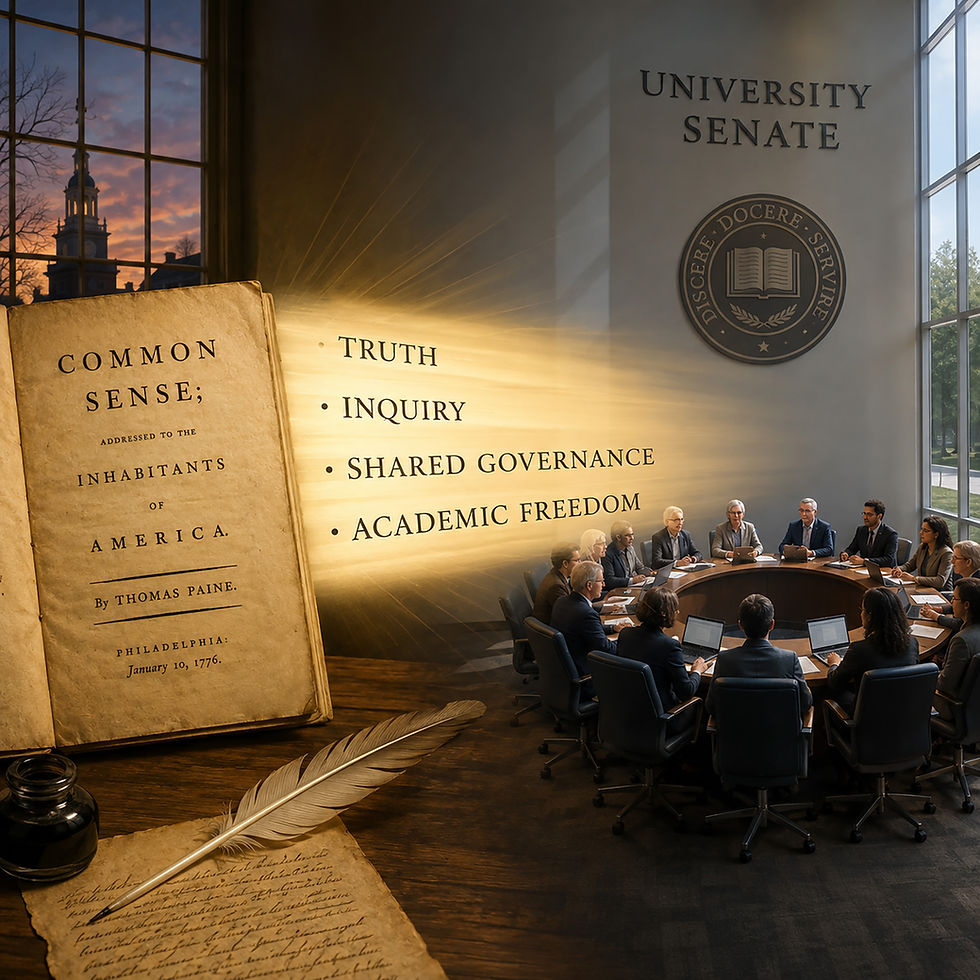
Universities were meant to serve as places where difficult questions could still be asked even when those questions were inconvenient.
Especially when they were inconvenient.
The Public Mission of Universities
This is where the distinction between universities and corporations matters most.
Corporations exist to serve shareholders, investors, growth strategies, and business objectives.
Universities exist, or at least historically existed, to serve a broader public mission: education, scholarship, inquiry, critical thinking, and preservation of independent knowledge.
Those missions can coexist.
But they are not interchangeable.
And when educational systems become increasingly entangled with workforce economics and corporate infrastructure, universities must work actively to protect the parts of academia that markets alone will not naturally preserve.
Curiosity without immediate profitability.
Independent critique.
Long-horizon scholarship.
Intellectual dissent.
Academic freedom.
These things are fragile.
This Is Not About Purity
No modern veterinary school operates in complete isolation from industry.
Nor should it.
The goal is not purity.
The goal is balance, transparency, and awareness.
The danger lies not in collaboration itself, but in failing to recognize how financial relationships gradually shape institutional priorities over time.
A profession that cannot critically examine its own incentive structures eventually loses the ability to distinguish between: education and recruitment, scholarship and marketing, partnership and dependency, or academic mission and operational necessity.
That distinction may become increasingly important in the years ahead.
Because once educational priorities begin aligning too closely with workforce economics alone, universities risk becoming something narrower than they were originally intended to be.
Not independent centers of inquiry that help shape the future of the profession, but highly sophisticated training systems designed primarily to supply it.

Comments