Teaching Hospitals or Talent Factories? Part 8: What Kind of Profession Do We Want? (#639)
- Rick LeCouteur
- May 25
- 4 min read

The Soul of Veterinary Specialization
Every profession eventually faces a moment when it must decide what it truly values.
Not in mission statements.
Not in branding campaigns.
Not in strategic plans filled with polished language and carefully managed optimism.
But in structure.
Because structures reveal priorities far more honestly than slogans ever do.
Who receives support.
What gets rewarded.
What gets protected.
What gets sacrificed when pressure intensifies.
Over the course of this series, we have explored:
The rise of corporate residency partnerships,
The changing purpose of residency training,
The economic realities facing young specialists,
The increasing dominance of productivity culture,
The erosion of the clinician-scientist pipeline, and
The growing tension between educational mission and workforce economics.
But beneath all those issues lies a deeper question.
A philosophical question.
What kind of profession does veterinary medicine want to become?
A Profession or an Industry?
Modern veterinary medicine increasingly exists at the intersection of two very different worlds.
One is professional.
The other is industrial.
The professional model values scholarship, mentorship, intellectual independence, ethical obligation, public trust, and stewardship of knowledge across generations.
The industrial model values efficiency, scalability, productivity, operational growth, market share, and return on investment.
Neither model is entirely wrong.
Indeed, modern medicine requires elements of both.
Hospitals cannot function without efficiency.
Clinical systems must remain financially viable.
Businesses are not inherently immoral.
But tension emerges when one model begins overwhelming the other.
And increasingly, veterinary medicine risks drifting toward a future in which operational logic becomes the dominant organizing principle of the profession itself.
The Language of the Profession Is Changing
One way to recognize cultural change is to listen carefully to language.
Veterinary medicine once spoke primarily about teaching, mentorship, scholarship, discovery, curiosity, and professional calling.
Increasingly, however, the language of the profession reflects corporate systems - productivity metrics, workforce pipelines, scalability, revenue generation, operational efficiency, strategic growth, and market expansion.
Again, none of these concepts are inherently evil.
But language shapes identity.
And professions gradually become what they repeatedly measure.
If residents are primarily discussed as workforce assets, if teaching hospitals are evaluated primarily through financial outputs, if scholarship becomes economically secondary, and if mentorship becomes operationally inconvenient, then eventually the profession itself begins changing at a cultural level.
Often without fully realizing it.
The Danger of Losing Slow Thinking
One of the greatest casualties of hyper-efficient systems is slow thinking.
Slow thinking is where difficult questions emerge, assumptions get challenged, wisdom develops, and intellectual originality survives.
But slow thinking is difficult to monetize.
It requires protected time, reflection, uncertainty, patience, and environments where people are allowed to think beyond immediate productivity demands.
Universities historically protected this space imperfectly, but importantly.
That protection mattered.
Because not every valuable idea emerges quickly.
Not every important discovery produces immediate revenue.
Not every great teacher generates measurable productivity metrics.
A profession that loses its capacity for deep reflection may still function clinically for a very long time.
But it risks becoming intellectually thinner over generations.
The Human Side of Specialization
At its best, veterinary specialization was never solely about technical expertise.
It was about transmission.
Experienced clinicians passing forward judgment, humility, curiosity, ethics, and professional identity.
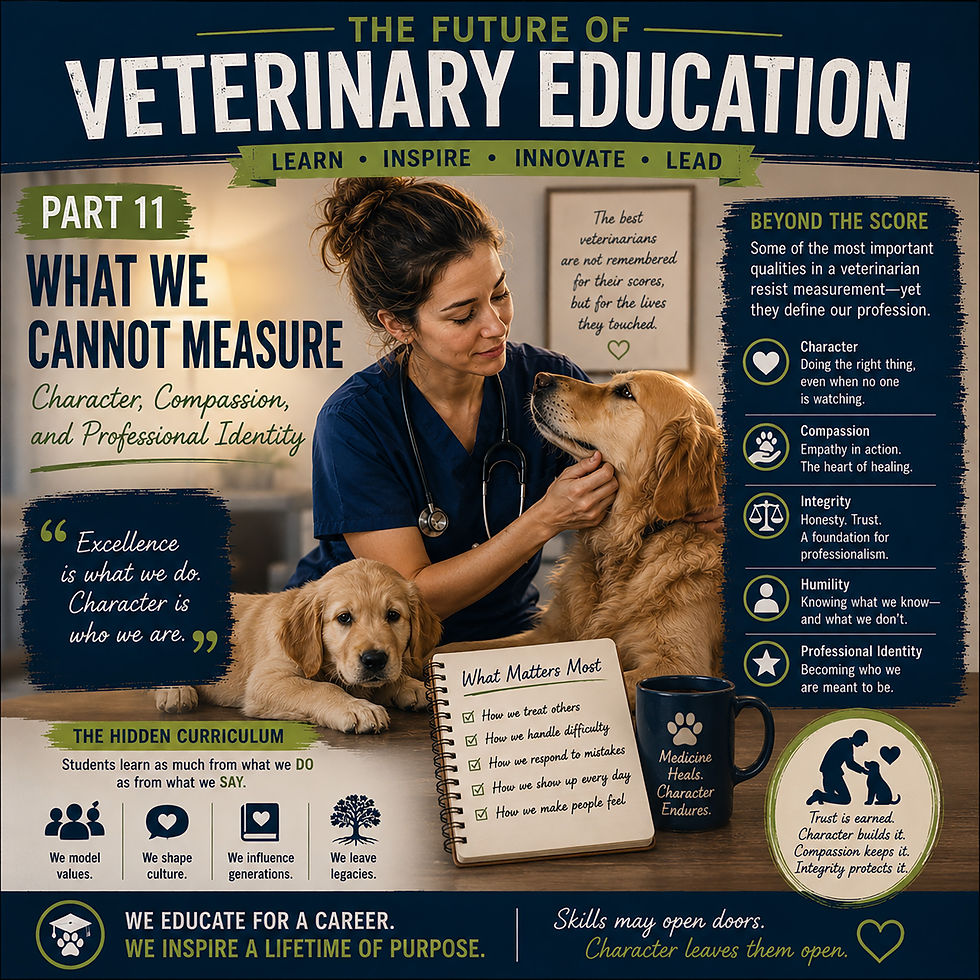
Some of the most influential specialists in veterinary medicine are remembered not because they generated the highest revenue or saw the largest caseloads, but because they inspired residents, shaped disciplines, advanced knowledge, challenged accepted thinking, and built academic communities around ideas.
Those contributions are difficult to quantify operationally.
Yet they often define the long-term character of a profession.
Young Veterinarians Are Not the Problem
One point deserves repeating clearly.
Young veterinarians are not responsible for these structural tensions.
They are responding rationally to the world they inherited: escalating debt, burnout, housing costs, economic instability, and institutional systems already under strain.
Nor are corporations uniquely responsible for all the changes occurring within veterinary medicine.
Many corporate hospitals provide excellent medicine and mentorship.
Many universities themselves have embraced productivity cultures that mirror private enterprise.
The issue is larger than individuals.
It is systemic.
Which means solutions must also be systemic.
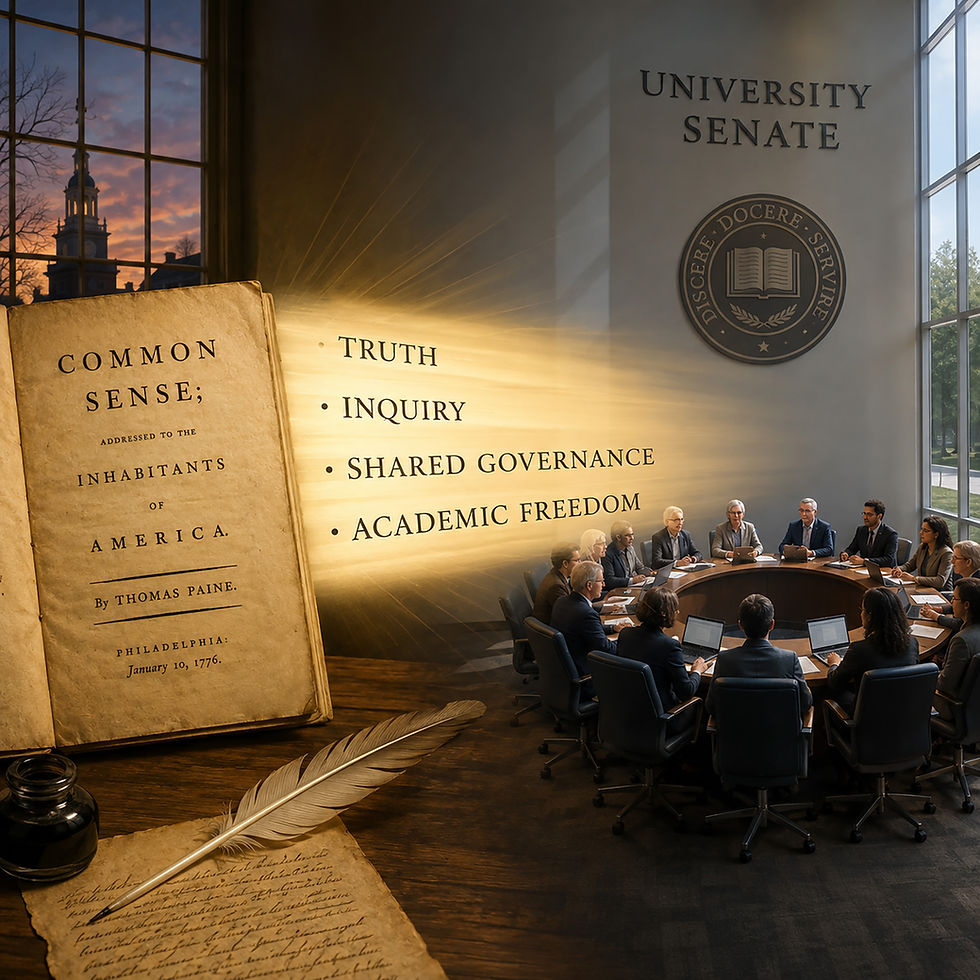
Universities Still Matter
Despite all the pressures facing academia, universities still occupy a unique place within society.
They are among the few institutions designed to preserve independent inquiry even when such inquiry is inconvenient.
That role matters profoundly.
Especially in professions increasingly shaped by market forces.
Because markets are extremely good at optimizing efficiency.
They are less naturally equipped to protect intellectual independence, difficult critique, long-horizon scholarship, or ideas whose value may not become obvious for years.
Universities help preserve those things.
Or at least they should.
That is why the weakening of academic culture matters far beyond faculty staffing numbers alone.
It affects the profession’s intellectual future.
The Real Risk
The greatest danger facing veterinary medicine may not be corporate involvement itself.
The greater danger may be forgetting that a profession requires more than technical competence and economic efficiency to remain healthy over time.
A profession also requires memory, scholarship, independent thinkers, mentors, and institutions willing to ask difficult questions without immediately calculating financial return.
Those qualities are fragile.
Once weakened sufficiently, they are extraordinarily difficult to rebuild.
What Happens Next?
The future of veterinary medicine has not yet been decided.
There is still time for thoughtful balance.
Hybrid models can succeed.
Collaboration can work.
Corporate practice and academia can coexist productively.
But coexistence requires intentionality.
It requires universities willing to defend scholarship.
Corporate partners willing to support educational independence.
Faculty willing to mentor despite institutional pressures.
Residents willing to value more than salary alone.
And leaders willing to recognize that not everything important can be measured quarterly.
Above all, it requires the profession to remain self-aware enough to ask difficult questions about what it is becoming.
The Final Question
Every generation inherits a profession temporarily.
Then passes it forward.
The question is not whether veterinary medicine will continue changing.
Of course it will.
The question is whether, amid all the pressures toward efficiency, scale, growth, and productivity, the profession will still preserve space for curiosity, mentorship, scholarship, intellectual independence, and wisdom accumulated slowly over time.
Because a profession can survive without strong universities for quite a while.
Hospitals will still function.
Cases will still be seen.
Businesses will still grow.
But eventually one must ask
if veterinary medicine loses too much of its academic soul
will it remain the same profession at all?

Comments