Sturmfrei: The Joy of Having the Place to Yourself (#751)

There is a German word for a particular kind of freedom that the English language has never quite managed to capture.
That word is Sturmfrei.
Imagine that you are a teenager. Your parents have announced that they are going away for the weekend. The house will be yours. No supervision. No questions about where you are going, what you are doing, or when you intend to go to bed.
You can turn up the music, invite your friends over, eat pizza for breakfast, and leave the dishes in the sink. For a glorious forty-eight hours, you are the master of your own little universe.
The Germans have a word for this delicious state of affairs: sturmfrei.
But the word describes something far more interesting than an adolescent's opportunity to misbehave.
A Word with a Military Past
The word sturmfrei is a combination of two German words: Sturm, meaning storm or assault, and frei, meaning free.
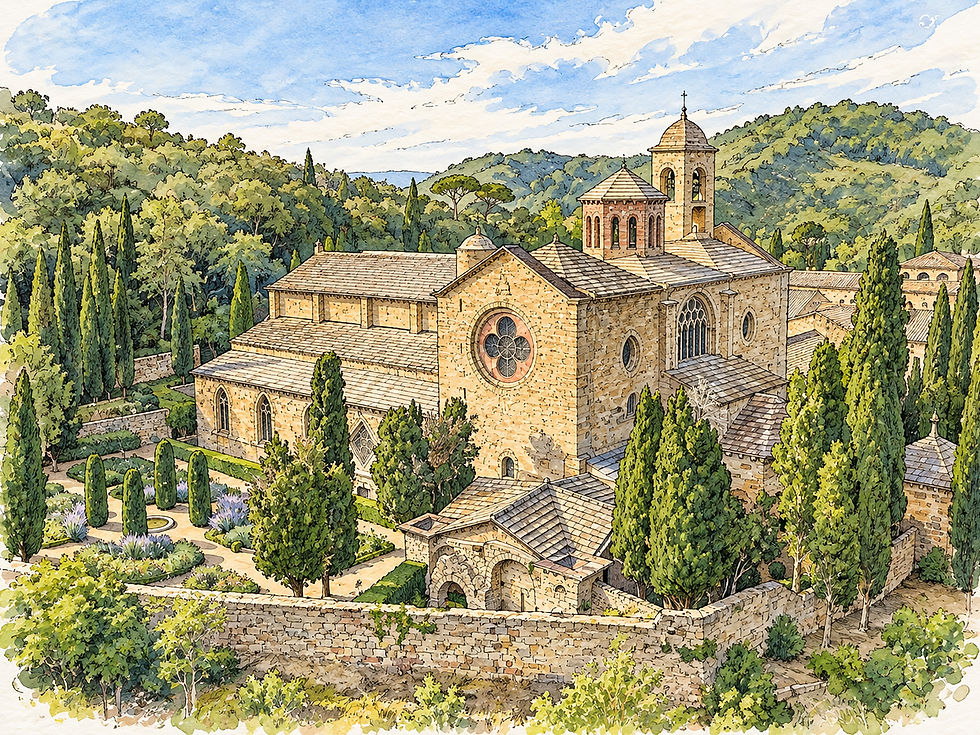
Its origins are military. A sturmfrei fortress was one that was secure against assault. Its walls were sufficiently strong, its defenses sufficiently formidable, that an attacking army could not easily storm it.
Over time, the word acquired a rather different meaning in everyday German.
Instead of describing a fortress protected against an invading army, it came to describe a home temporarily liberated from its usual authority figures.
The parents have gone away. The children have sturmfrei.
What was once a term associated with military security has become an expression of domestic independence.
It is a rather wonderful linguistic transformation.
The Freedom of Being Alone
Although sturmfrei is most commonly associated with teenagers enjoying an unsupervised house, its appeal extends well beyond adolescence.
Consider the adult whose spouse or partner has gone away for a few days.
There is no suggestion that the relationship is unhappy or that the absent partner is unwelcome. Quite the contrary.
The pleasure of sturmfrei depends, at least in part, on the knowledge that the separation is temporary.
Nevertheless, there is something undeniably appealing about having the house to oneself.
You can eat dinner whenever you please. You can watch a film that nobody else would enjoy. You can read until three in the morning, listen to music without headphones, or spend an entire afternoon doing absolutely nothing.
You can even leave the toilet seat up without provoking a domestic incident.
The important distinction is that you are not necessarily doing anything you would ordinarily be forbidden to do. You are simply enjoying the absence of the small negotiations that accompany living with another person.
Every shared household involves compromise. We adjust our schedules, our habits, our preferences, and sometimes even our personalities to accommodate the people with whom we live.
Most of these adjustments are so familiar that we barely notice them.
Until, suddenly, we don't have to make them.
That is sturmfrei.
Solitude Is Not Loneliness
There is an important distinction between solitude and loneliness.
Loneliness is the unwelcome absence of companionship.
Solitude is the opportunity to enjoy one's own company.
Sturmfrei belongs firmly in the second category.
It is not the sadness of an empty house. It is the pleasure of a house that is temporarily and entirely your own.
In a world in which we are increasingly expected to be available, responsive, and connected, such moments can be surprisingly valuable.
Our telephones demand attention. Our computers deliver an endless procession of messages. Our calendars remind us of obligations, appointments, and commitments.
Even when we are physically alone, we are rarely free from the expectations of others.
Perhaps that is why sturmfrei is such an appealing concept. It offers a brief suspension of those expectations.
There is nobody to entertain, nobody to accommodate, and nobody whose approval we need to seek.
For a little while, we are free to be entirely ourselves.
The Paradox of Temporary Freedom
There is, however, a curious paradox at the heart of sturmfrei.
Its pleasure depends on its impermanence.
A teenager who enjoys a weekend without parental supervision may discover that the novelty wears off when the refrigerator is empty, the laundry is piling up, and there is nobody to prepare dinner.
An adult who relishes a few days alone may find that the silence becomes less appealing as the days pass.
The very people whose absence creates the freedom are often the people whose return makes life meaningful.
And perhaps this is what distinguishes sturmfrei from independence.
Independence is a condition.
Sturmfrei is an interlude.
It is a holiday from the familiar arrangements of everyday life, rather than a permanent escape from them.
The pleasure lies in knowing that, before too long, ordinary life will resume.
The Importance of a Little Sturmfrei
I suspect that most of us could benefit from a little more sturmfrei in our lives.
Not because we wish to escape the people we love, but because even the happiest relationships benefit from a little breathing room.
Time alone allows us to pursue interests that others may not share, to indulge our eccentricities, and to rediscover the pleasure of making decisions without consultation.
It can also remind us that companionship is something to appreciate rather than something to take for granted.
There is a particular satisfaction in welcoming someone home after enjoying a few days of independence. Their return restores the familiar rhythms of shared life, but perhaps with a renewed appreciation of what those rhythms contribute.
The Germans have managed to capture all of this in a single, rather splendid word.
English offers expressions such as having the house to yourself, home alone, and the cat's away, the mice will play.
But none quite captures the particular combination of temporary independence, pleasurable solitude, and freedom from domestic expectations that sturmfrei conveys.
And there is one final irony worth considering.
A word that originally described a fortress secure against an external assault has come to describe the pleasure of being free from the people who ordinarily live inside it.
Perhaps the real luxury of sturmfrei is not the opportunity to do whatever we want.
It is the opportunity, however briefly, to answer to nobody but ourselves.
And sometimes, that is quite enough.


Comments